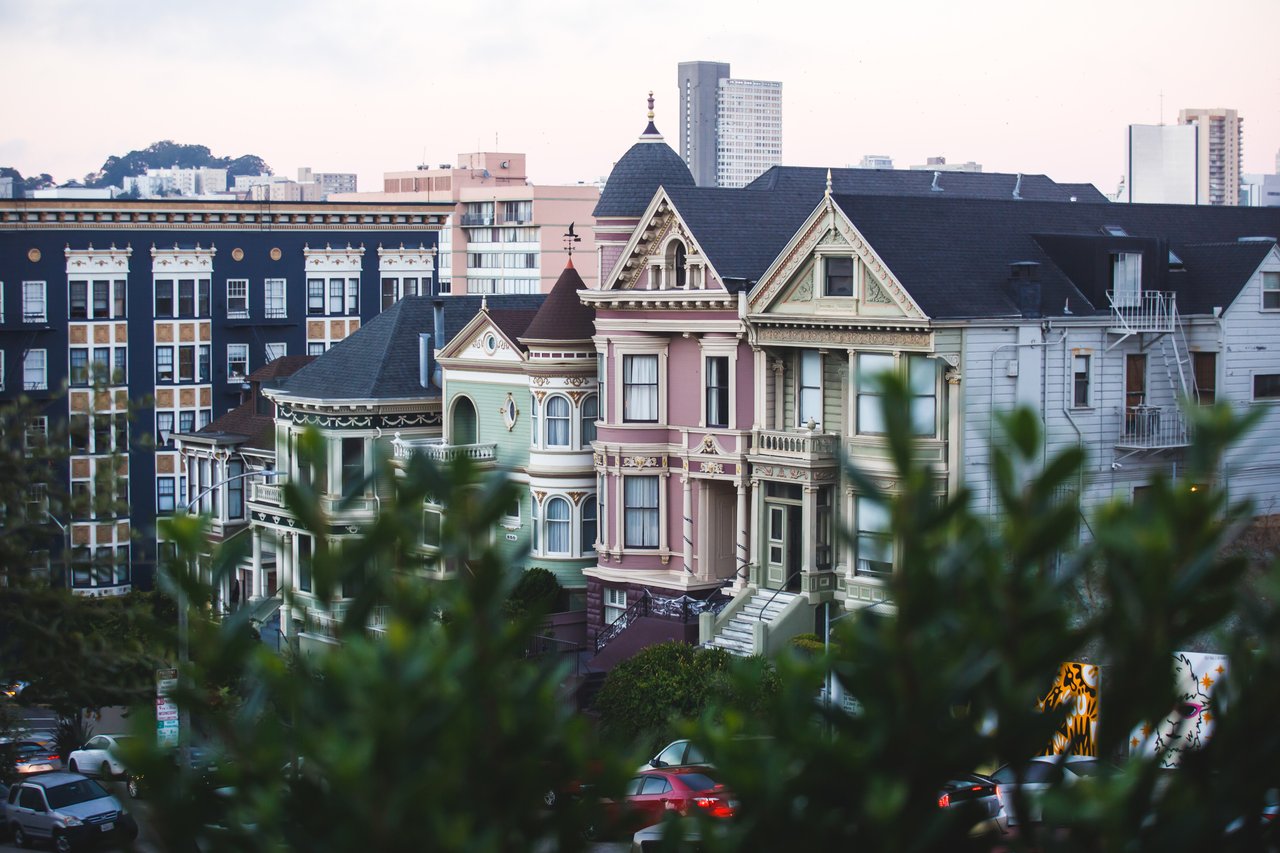
Lower Haight
Before neighborhoods got rebranded and polished, this stretch of the city was already doing its thing.
Lower Haight sits just below Haight-Ashbury, but it has always felt a little more lived-in, a little less performative, and a lot more local. Close to Upper Haight, yes—but without the tourists, the spectacle, or the constant swirl of people passing through.
What it does offer: consistency.
This is one of those rare San Francisco neighborhoods that hasn’t chased trends. It didn’t suddenly become interesting. It always was.
Haight Street has long been a corridor of neighborhood life. In the ’80s, before the Mission became the center of nightlife, this is where you went out. The “If you know, you know” bars were here. The energy was here. And while things have shifted over time, that underlying rhythm never really left.
You feel it walking down the street.
Local markets where you can grab fresh fruit. Small, independent shops. A mix of cultures that shows up in the food, the storefronts, and the people who’ve stayed. It’s not curated. It’s accumulated.
The architecture carries that same sense of continuity. Rows of Victorian and Edwardian homes line the streets, many of them duplexes or multi-unit buildings, painted, repainted, and lived in over generations. It’s classic San Francisco—detailed, slightly imperfect, and full of character.
There’s also history here. Lower Haight has long been part of the Western Addition and Fillmore District, and like neighboring Hayes Valley, it was historically home to a strong Black community. That legacy is still part of the neighborhood’s foundation, even as the city around it has changed.
Mornings might look like grabbing a cup from Underground Coffee and a walk through the neighborhood, finding that hidden labyrinth, no real agenda. Or heading a few blocks over to Alamo Square (which many locals would argue feels just as much like Lower Haight as anything else) for iconic views, a little breathing room, and a game of tag with your dog.
Evenings? Meeting friends at The Toronado or Mad Dog, followed by something casual, easy, and nearby.
There’s life here, but it’s not loud about it. It’s punk rock, but doesn’t have to prove it.
Transportation is one of the biggest advantages. Multiple MUNI lines run straight through the neighborhood, and you’re walking distance to Duboce Triangle, the underground trains along Market Street, and easy connections across the city. You’re also right between neighborhoods that people go out of their way to get to—Mission District, Mission Dolores, and Castro District, which means you get access without the chaos.
Daily life is easy here. Safeway and Whole Foods Market are both close enough to be part of your regular loop, and the neighborhood itself has everything you need within a few blocks.
If you’re looking for shiny and new, this probably isn’t it. But if you want a neighborhood that feels established, connected, and quietly confident in what it is… Lower Haight delivers.
The median age in Lower Haight is in the mid-30s, with a mix of long-time residents and newer arrivals who tend to stay once they land. Translation: people come here for convenience, and stick around because it works.
HOME: Lower Haight is made up primarily of Victorian and Edwardian multi-unit buildings, condos, TICs, and some single-family homes. Prices typically start around $800,000 for smaller studio units and can climb into the $5,000,000+ range for larger flats and full buildings. It’s less about luxury finishes and more about location, layout, and that classic San Francisco architecture you simply can’t recreate.
7,093 people live in Lower Haight, where the median age is 35 and the average individual income is $107,506. Data provided by the U.S. Census Bureau.
Total Population
Median Age
Population Density Population Density This is the number of people per square mile in a neighborhood.
Average individual Income
Lower Haight has 3,312 households, with an average household size of 2. Data provided by the U.S. Census Bureau. Here’s what the people living in Lower Haight do for work — and how long it takes them to get there. Data provided by the U.S. Census Bureau. 7,093 people call Lower Haight home. The population density is 81,753 and the largest age group is Data provided by the U.S. Census Bureau.
Total Population
Population Density Population Density This is the number of people per square mile in a neighborhood.
Median Age
Men vs Women
Population by Age Group
0-9 Years
10-17 Years
18-24 Years
25-64 Years
65-74 Years
75+ Years
Education Level
Total Households
Average Household Size
Average individual Income
Households with Children
With Children:
Without Children:
Marital Status
Blue vs White Collar Workers
Blue Collar:
White Collar: