Here’s a fun little piece of San Francisco real estate nonsense.
In July, Pacific Heights condo inventory dropped to its lowest level in a decade. Sixteen condos sold. Three-quarters sold over asking. Nine more went pending.
Buyers were clearly competing for not very much inventory.
And the median sale price went down.
Wait. What?
This is why I get twitchy when someone tells me, “But I saw the median price in Pacific Heights is…”
Stop right there.
The number isn’t wrong. It just isn't telling you what you think it's telling you.
Pacific Heights Is Too Small for One Number to Explain It
Pacific Heights doesn't sell hundreds of homes every month. Roughly 13 condos and five single-family homes change hands in an average month.
That means one weird month (or one spectacular house) can make the median look like the market has done something dramatic when the market hasn't done anything of the sort.
The median is simply the middle sale among whatever happened to close during that particular window.
It doesn't know whether the house you're considering has a Golden Gate Bridge view.
It doesn't know whether the kitchen was remodeled in 1997 and someone is calling it "timeless."
It doesn't know whether the foundation has been retrofitted.
It doesn't know whether you're buying a condo, a TIC, or a glorious eight-bedroom money pit.
It's a number.
Don't give it responsibilities it cannot handle.
One Giant House Can Screw Up the Whole Month
This gets even more ridiculous at the upper end.
In April 2026, an estate at 2898 Vallejo Street sold off-market for $56 million.
Yes. Fifty-six million dollars.
Apparently there remains a market for people who look at a $56 million house and say, Yep, that'll do.
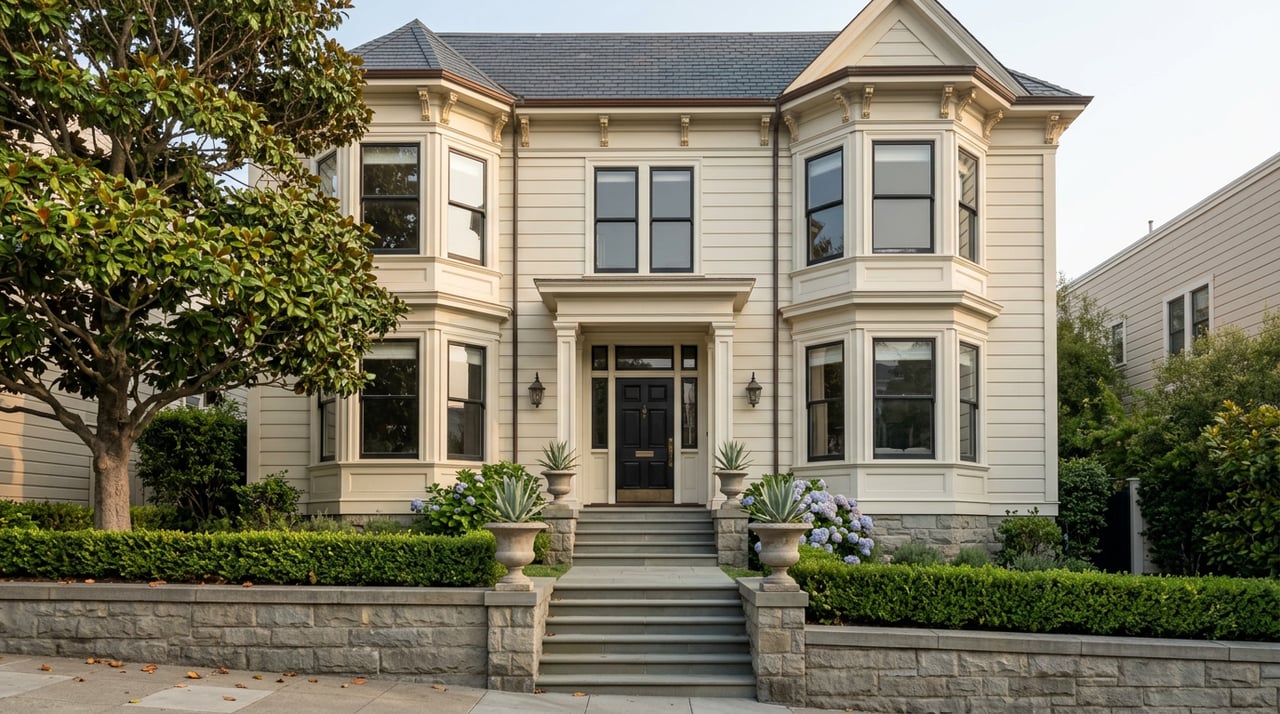
And there's actually a shortage of the thing those buyers want: large, completely done, spectacular San Francisco houses with real views.
That same month, 2830 Pacific Avenue closed for $27.5 million after spending nearly a year on the market. It had previously been offered for $35 million, came back at $27.5 million, and eventually sold for the full asking price.
Two enormous transactions. One neighborhood. One month.
Now imagine asking that month's median to tell you what your two-bedroom condo is worth.
It can't.
There Isn't One Pacific Heights Market
This is where the numbers actually become useful.
Because when you stop lumping every property in Pacific Heights together, you discover that they're behaving very differently.
As of July 2026, the neighborhood overall was moving quickly: median days on market had fallen to about 12 days, and more than half of sales were closing above asking.
But look inside the market and it gets much more interesting.
Homes from $3 million to $6 million: About 10 days on market and roughly 7% over asking.
That's not warm. That's hot.
Homes under $1.5 million: More like 19 days and generally closer to asking price.
Still moving. Just without quite as much blood sport.
TICs: More than 30 days.
And that's partly because buying into a TIC involves additional considerations and limited financing. Nothing says
Property type matters too.
Condos make up roughly two-thirds of Pacific Heights sales, but single-family homes command a substantial premium, about $1,671 per square foot versus $1,241 for condos in the July data.
So when someone says, “Pacific Heights is selling for $X,” my next question is:
Which Pacific Heights?
Now Let's Talk About the Thing That Can Cost You $150,000
Here's where staring at price-per-square-foot can really get you into trouble.
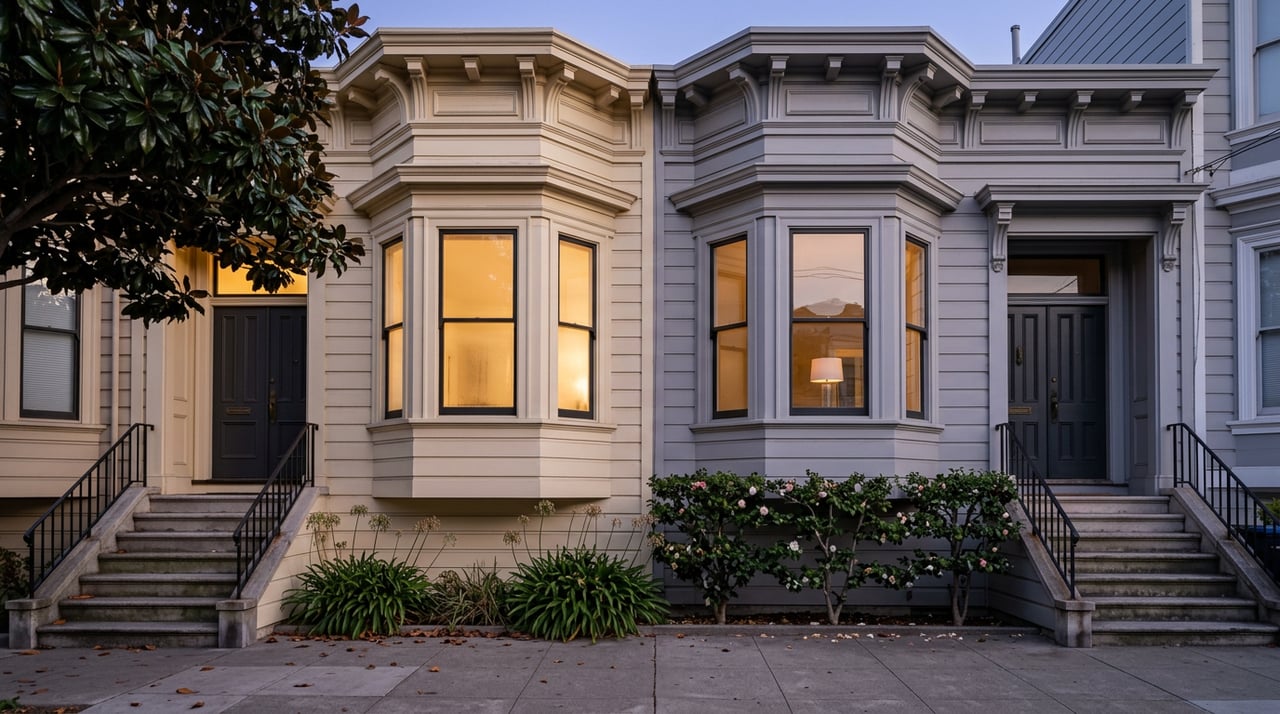
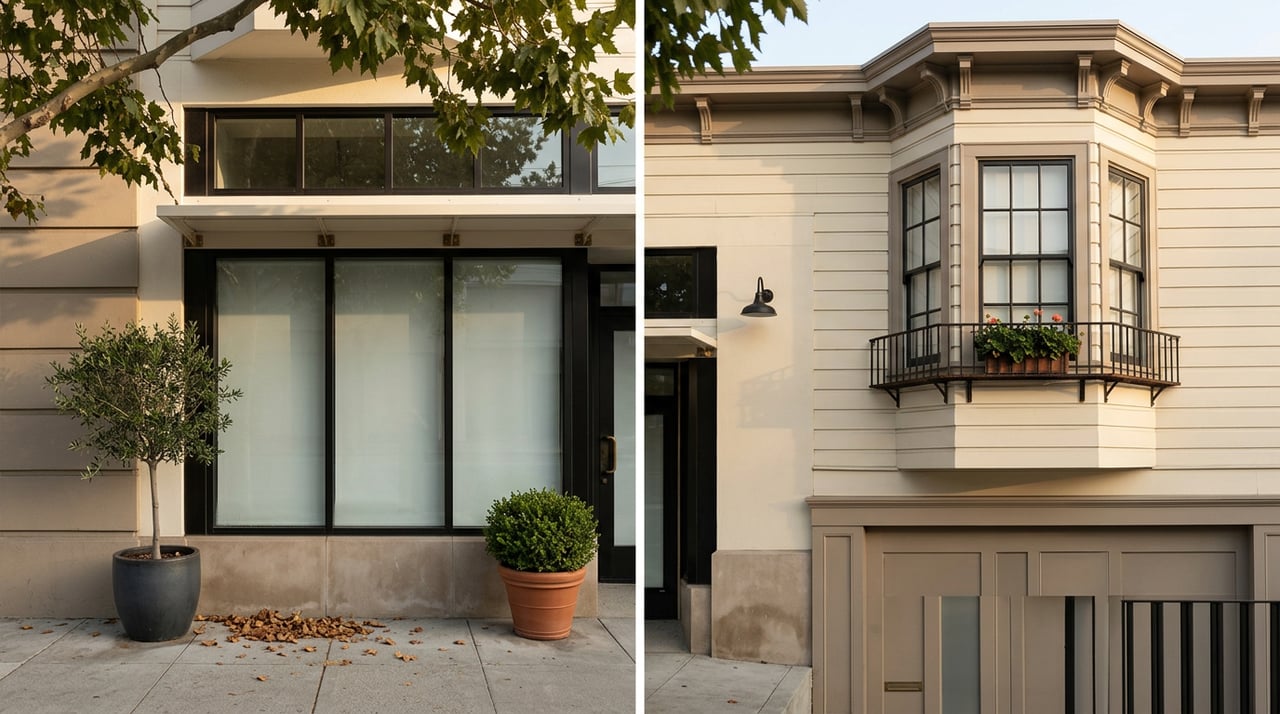
Pacific Heights is full of gorgeous old houses.
And gorgeous old houses have gorgeous old-house problems.
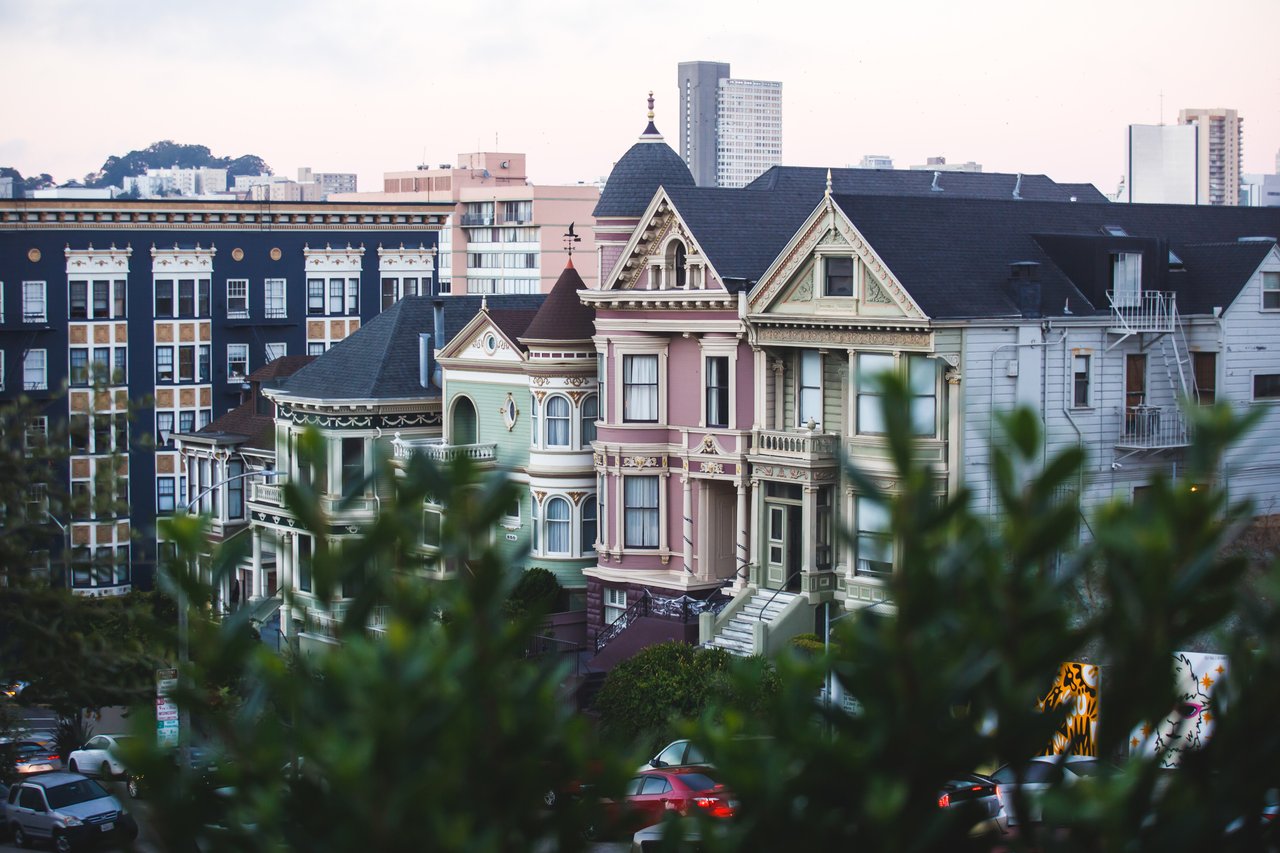
Much of the neighborhood survived the 1906 earthquake, which is one reason we still have this extraordinary collection of Victorians and Edwardians.
Wonderful for architecture.
Potentially less wonderful for foundations.
And electrical systems.
“Knob-and-tube” is one of those phrases that makes Realtors cringe a little, and San Francisco's old houses can be full of it. It doesn't automatically mean disaster, but it can mean insurance issues, electrical upgrades, and another potentially expensive item that wasn't particularly obvious when you fell in love with the crown molding.
Then there's what's holding the house up.
Very broadly, you can encounter older homes with unreinforced brick or masonry foundations, pier-and-post systems with cripple walls, or houses where somebody has already done the expensive seismic work.
Those are not financially equivalent houses.
Depending on the property and the work required, seismic upgrades can easily become a six-figure project.
So let's say House A and House B are both around $3 million and appear fairly similar on a price-per-square-foot basis.
House A has already been properly retrofitted.
House B has not.
Congratulations. Those houses do not cost the same amount.
This is why we inspect things.
And why I would much rather have a structural engineer tell me what is underneath a 120-year-old house than have Zillow tell me what it thinks the house is worth.
And Then There's the Tax Break Nobody Talks About
Here's one of my favorite obscure bits of San Francisco real estate knowledge.
If you're buying a qualifying historic property, ask about the Mills Act.
Under San Francisco's program, owners of certain designated historic properties can enter into preservation contracts in exchange for potentially significant property-tax savings.
And by significant, I mean potentially up to 50%.
Now before you run off and buy a Victorian because Wendy said the government will cut your property taxes in half: no.
There are rules.
The property has to qualify historically. Residential properties are subject to an assessed-value eligibility limit. You take on preservation and maintenance obligations. The contracts run in 10-year terms and renew annually.
This isn't a coupon.
But for the right property and particularly for a newer owner whose Proposition 13 assessment hasn't been sitting around since the Reagan administration, the savings can matter.
And remarkably few San Francisco properties participate.
This is exactly the kind of thing that gets missed when buyers are focused entirely on the purchase price.
The purchase price is the beginning of the math.
It isn't the end.
So What Is the House Actually Worth?
This is the question everybody wants answered.
And unfortunately, there's no magic number hiding in a market report.
For a Pacific Heights property, I want to know:
What kind of property is it?
What price tier is it competing in?
What have genuinely comparable properties sold for?
How quickly is that particular segment moving?
What's underneath the house?
Has it been retrofitted?
What's the permit history?
Is it historically designated?
Could the Mills Act apply?
And—because this is San Francisco, what can you see out the windows? Are you looking at your neighbor's wall or Alcatraz and the Golden Gate?
That's how you get from “The Pacific Heights median is…” to “Here's what this particular property is probably worth.”
Those are two completely different conversations.
If you're considering Pacific Heights, it's also worth reading my piece on how the neighborhood actually lives day to day, because buying a home isn't just buying the building.
You're buying Tuesday morning.
Where you get coffee. Where you walk the dog. Whether you're hiking straight uphill carrying groceries because apparently you have chosen this life.
The market report matters.
It just doesn't get the last word.
And if you're looking at a specific Pacific Heights property and want help figuring out what the numbers actually mean, reach out to me.
I will happily nerd out over the comps, the disclosures, the foundation, and the things the median forgot to mention.
Frequently Asked Questions
Is Pacific Heights currently a buyer's or seller's market?
It depends on what you're buying. As of July 2026, the $3 million to $6 million segment was moving in roughly 10 days and averaging about 7% over asking. Properties under $1.5 million were taking closer to 19 days and selling nearer to asking. Co-ops were slower still. One neighborhood, several different markets.
Does every historic Pacific Heights home qualify for the Mills Act?
No. The property has to meet specific historic-designation and assessed-value requirements, and participation comes with preservation obligations. It's absolutely worth investigating when you're considering a qualifying property, but don't assume that "old and gorgeous" automatically means Mills Act.
How do I know whether an older Pacific Heights home needs seismic work?
Don't guess from the listing. Review the disclosures and permit history and, when appropriate, have a structural engineer evaluate the property. A pretty Victorian façade tells you essentially nothing about what's holding it up.
And what's holding it up is a fairly important detail.