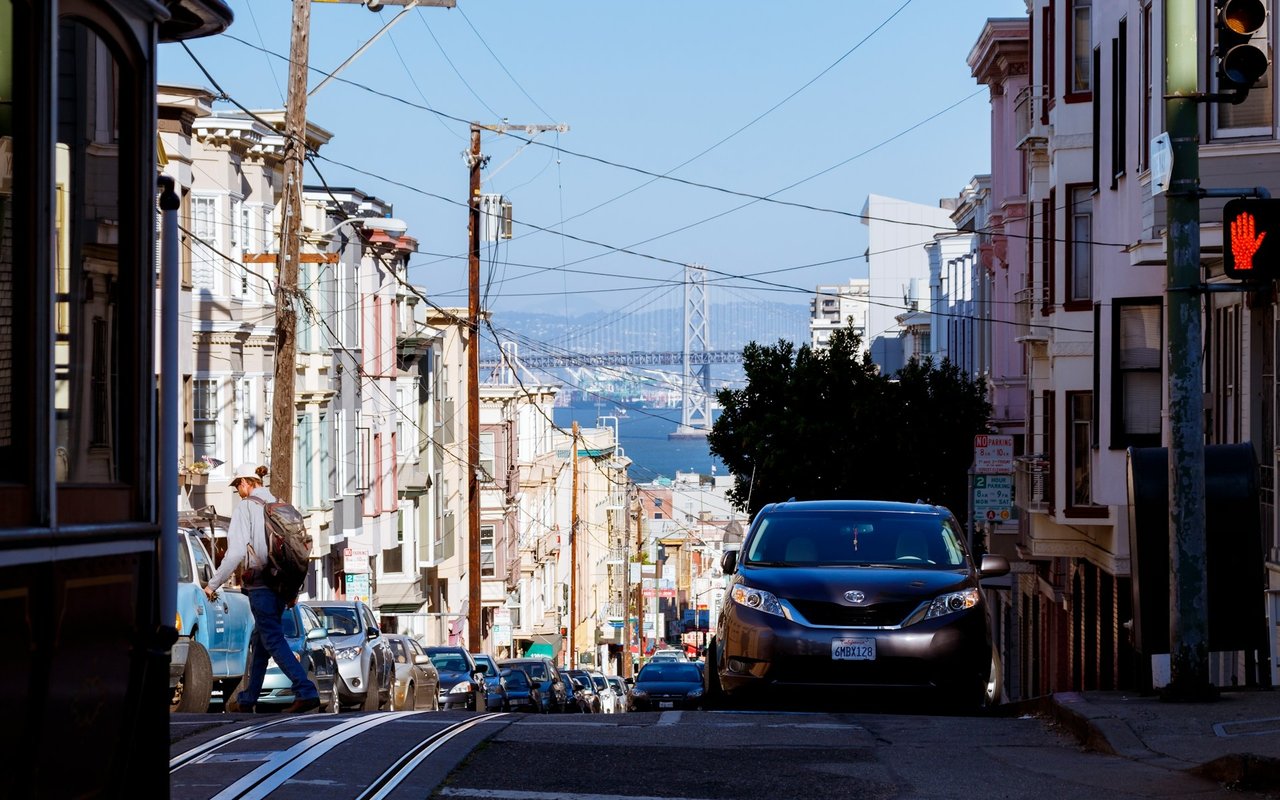
The Western Addition is where I learned San Francisco.
I lived here from 1987 through 1999, long before I became a Realtor, when rent was cheap, nobody was calling neighborhoods "hot," and the city felt a little rougher around the edges.
What it does offer: history.
Not the kind you read about. The kind you walk past every day.
When the 1906 earthquake struck San Francisco, the real destruction came afterward. Fire swept west from downtown, consuming block after block of the city. Desperate to stop it, firefighters used dynamite along Van Ness Avenue to create a firebreak.
It worked.
Much of what stood west of Van Ness survived.
That's why the Western Addition contains one of the largest collections of Victorian architecture anywhere in San Francisco.
And it's spectacular.
Most people know the Painted Ladies at Alamo Square. They stop for the photo, admire the view, and move on.
What many visitors don't realize is that the Painted Ladies are just the beginning.
Walk a few blocks in almost any direction and you'll find dozens more. Grand Victorians. Colorful Victorians. Modest Victorians. Entire streets lined with homes that have quietly survived for more than a century.
If you love San Francisco architecture, this neighborhood rewards wandering.
The Western Addition has also played an important role in the city's cultural history. Following World War II, it became home to a thriving Black community, helping shape San Francisco's music, arts, and business culture for generations. That history remains an important part of the neighborhood's identity today.
The geography is surprisingly convenient. You're close to Hayes Valley, Japantown, Pacific Heights, Lower Haight, and Alamo Square. Downtown is accessible. Golden Gate Park isn't far away. The location quietly puts much of the city within reach.
Mornings might start with coffee and a walk beneath Victorian bay windows that have watched generations come and go. Afternoons are for wandering tree-lined blocks and discovering details you've somehow missed a hundred times before. Evenings might mean dinner in nearby Hayes Valley, Fillmore Street, or Japantown before heading home to a neighborhood that feels distinctly residential despite sitting near the center of the city.
There’s energy here, but it’s understated.
Transportation is excellent. Multiple MUNI lines run through the neighborhood, and several major corridors connect the Western Addition to the rest of the city. Parking remains San Francisco parking, but compared to denser neighborhoods, it can occasionally feel almost civilized.
If you're looking for shiny and new, this probably isn't your place. But if you love architecture, history, and neighborhoods with roots that run deep, the Western Addition is hard to beat.
The Western Addition is a mix of long-time residents, families, professionals, and newcomers drawn by its central location and historic housing stock. Translation: this is one of those neighborhoods where old San Francisco and new San Francisco continue to live side by side.
HOME: The Western Addition offers some of the finest Victorian and Edwardian housing stock in the city, ranging from classic flats and duplexes to grand single-family homes. Condos typically begin around $700,000, while larger Victorians and restored historic homes can climb well beyond $3,000,000. You're not just buying a home here. You're buying a piece of San Francisco's architectural history.
11,601 people live in Western Addition, where the median age is 44 and the average individual income is $63,225. Data provided by the U.S. Census Bureau.
Total Population
Median Age
Population Density Population Density This is the number of people per square mile in a neighborhood.
Average individual Income
Western Addition has 5,609 households, with an average household size of 2. Data provided by the U.S. Census Bureau. Here’s what the people living in Western Addition do for work — and how long it takes them to get there. Data provided by the U.S. Census Bureau. 11,601 people call Western Addition home. The population density is 49,474 and the largest age group is Data provided by the U.S. Census Bureau.
Total Population
Population Density Population Density This is the number of people per square mile in a neighborhood.
Median Age
Men vs Women
Population by Age Group
0-9 Years
10-17 Years
18-24 Years
25-64 Years
65-74 Years
75+ Years
Education Level
Total Households
Average Household Size
Average individual Income
Households with Children
With Children:
Without Children:
Marital Status
Blue vs White Collar Workers
Blue Collar:
White Collar: